The enemy isn't your partner. It's the negative cycle.
Marriages often begin with high expectations of love and happiness, yet couples get trapped in the same arguments. Beneath visible behaviour lie subconscious patterns and value systems the brain is hardwired to protect.

Your brain is protecting you, not attacking them

Subconscious protection
Arguments appear to be caused by a partner's behaviour, but they are driven by the brain's attempt to protect your identity, values and sense of safety.
The survival mechanism
Neuroscience shows the brain is designed for survival and scans for threats many times a second — including threats to core values like respect, security, freedom and autonomy.
Perception of reality
If your brain is trained to look for what is wrong or threatening, it will consistently find it — reinforcing a cycle of reactivity.
When one partner's value system is triggered, they react — and that triggers the other
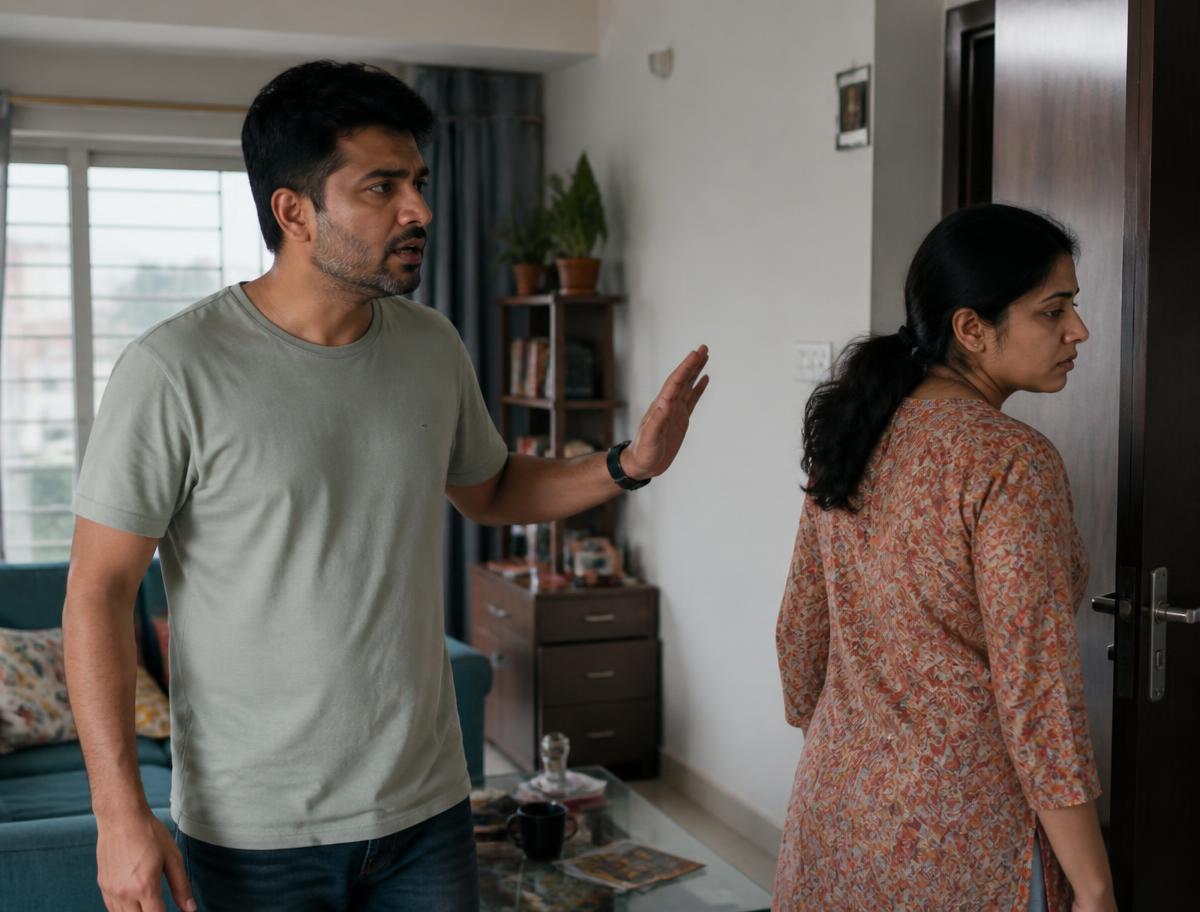
Fight
Blaming, criticising, attacking, sarcasm, or repeatedly arguing to prove yourself right — often through “you always” and “you never” statements.
Flight
Avoiding the conflict: leaving the room, getting distracted by work, social media, shopping, or scrolling to escape the situation.
Freeze
Silence, emotional numbness, blankness or a complete shutdown after previous attempts at fighting or fleeing have failed.
Conflict creates a harmful loop: pain leads to criticism, criticism is heard as an attack, the attack triggers defensiveness or withdrawal — which causes more pain. Neither person is “wrong”. Each is simply protecting their own subconscious value system.
Transformation begins with the power of one
Change starts when one partner takes conscious responsibility for their actions. Instead of reacting from a subconscious place of defence, pause, choose a response carefully, and aim to listen and understand.

- 01
Shift focus to yourself
Instead of blaming your spouse, work to understand your own triggers, values and emotional patterns.
- 02
Identify the underlying value
Arguments are often rooted in unmet needs around safety, connection, trust or belonging.
- 03
Reframe the enemy
Your spouse is not the enemy. The real enemy is the negative communication cycle itself.
- 04
Move to mutual understanding
Once you understand your own patterns, you can understand your partner's value systems — the key to a deeper bond.
Rather than focusing on your partner's triggered behaviour, focus on the underlying value. What appears as anger is often an unmet need for connection; silence may represent an unmet need for respect. And to create change, make requests, not demands.
Three conversations that change the pattern
Watch, pause and reflect — each conversation unpacks one part of the cycle you are living inside.


Why do we keep having the same arguments again and again?
Recurring arguments are rarely about the behaviour on the surface. They are the brain protecting your identity, values and sense of safety.
Read more →
How to talk to your spouse without turning every conversation into an argument?
Conversations escalate when partners feel attacked, blamed, controlled, dismissed or unsafe. Conscious responses change the outcome.
Read more →
My spouse has become emotionally distant. What should I do?
Emotional distance is often protection, overwhelm, hurt or a loss of safety — not the absence of love.
Read more →Talk to your spouse without turning it into an argument
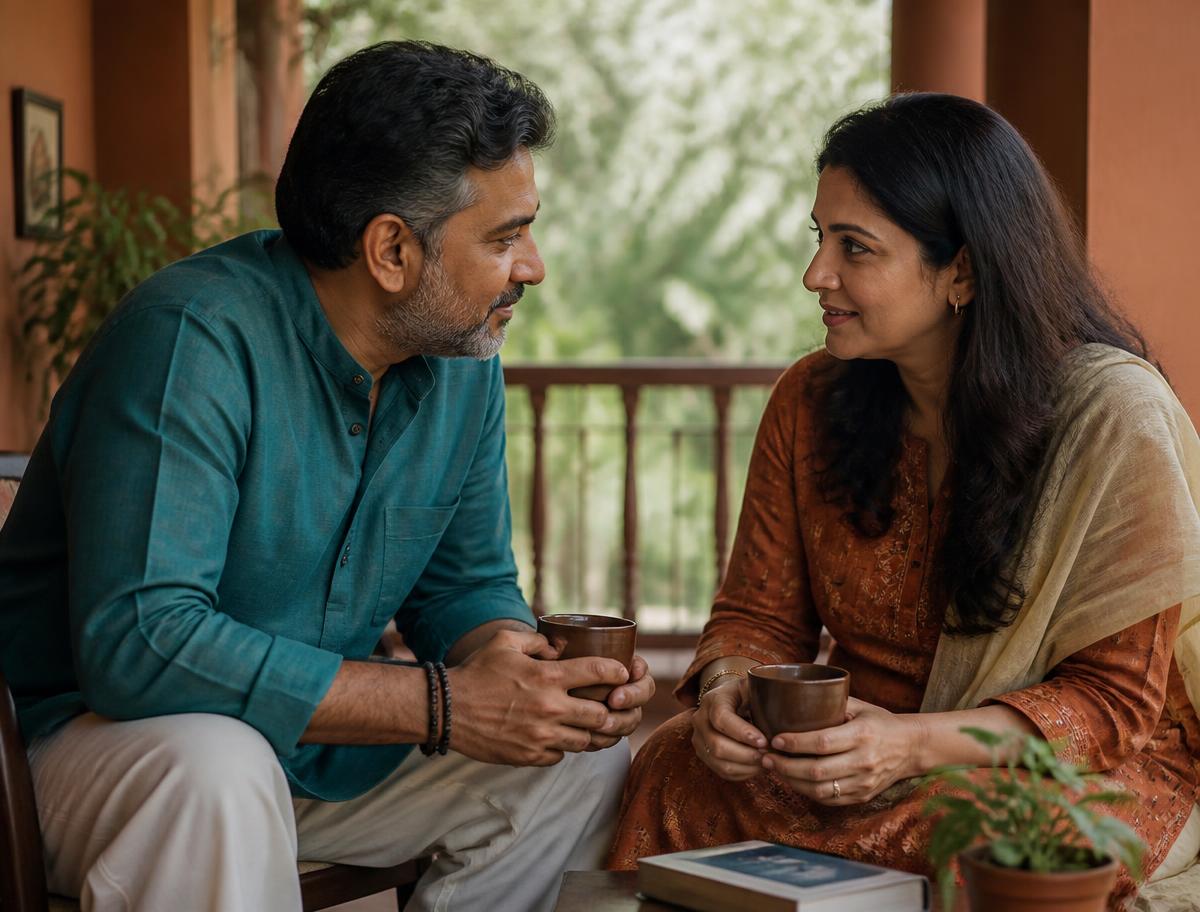
Empowering language
Communicate in a way that empowers your partner. Express personal needs and feelings — “I felt anxious” — rather than launching accusations.
Strategic timing
Avoid discussing sensitive topics when exhausted, hungry, in a rush, or in front of others.
All the components
True communication involves managing your intention, tone, timing, emotional state and body language.
Check your intention
Before you speak, ask yourself: is my goal to win the argument, or to truly understand my partner?

From the outside you're together. Inside, you feel alone.
Emotional distance is a low energy space. The thoughts sound like: is love still there, or gone? What about their interest in me? Am I really alone in this marriage? Have the priorities shifted?
The important truth: emotional distance may actually be protection, overwhelm, hurt or a loss of safety. The hidden pattern is one partner pursuing connection while the other wants space. The avoidance of one increases the anxiousness of the other, and the cycle intensifies with every repeated conversation.
“If I get a fever, do I wait until I reach the ICU to get treatment? In relationships, we keep postponing. We think time will heal.”
Rebuild safety, not pressure
Emotional closeness returns through safety, not pressure. Wherever focus goes, energy flows — so bring the focus back to yourself and notice your part in the pattern.

- ✓Recreate emotional safety — that is the real goal, not reassurance.
- ✓Regulate your own fear first and lift your own energy.
- ✓Separate the fact from the meaning you are adding to it.
- ✓Approach with curiosity: “I feel some distance and I want to understand what may be happening here.”
- ✓Speak your need without blame, and allow yourself to be vulnerable.
- ✓Create small safe moments — tea together, a walk — and repair after every conflict.
- ✓Stay patient and consistent if your partner does not respond yet.
- —Don't chase connection or pressure your partner into closeness.
- —Avoid repeated questioning, comparisons and accusations.
- —Don't test love or force heavy conversations every day.
- —Don't let the low-energy state spread through the whole household.
- —Don't treat your partner as the villain — the cycle is the villain.

Ask yourself
Which value of mine is feeling threatened right now? What meanings have I given to avoidance or aggression, and how did I react?
Repair matters
Conflict is part of intimate relationships. After each repair the bond gets stronger and you understand your partner more deeply.
The people guiding this work

Dr. Kishore Chainani
An award-winning PCC-certified coach with 25+ years of leadership experience, helping individuals and organizations achieve transformation in business, leadership, and relationships.

Ritika Chainani
An NLP-trained Relationship Coach mentoring individuals since 2009, helping people improve relationships, emotional understanding, and personal growth with confidence.

When you understand the pattern beneath the distance, connection can begin again
Sometimes these suggestions are hard to implement because deeper fears, insecurities, voids or trauma are playing against you. If you want to do deeper work, reach out — we will block a one-to-one to first understand what you're going through and whether this is for you.
This is coaching, not therapy or medical treatment. If your relationship involves violence, threats, coercive control, or you are worried about your or a child’s safety, please see our Safety, Ethics and Referral Policy first.
A private conversation is the first step.
There is no script and no pressure. If the fit is right for both of us, we design what happens next together.
Book a private conversation